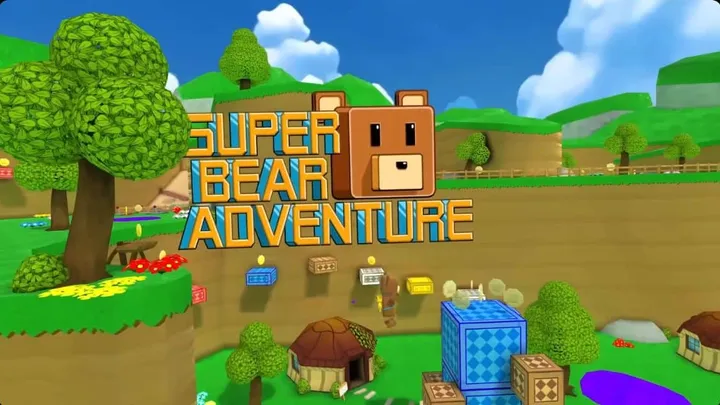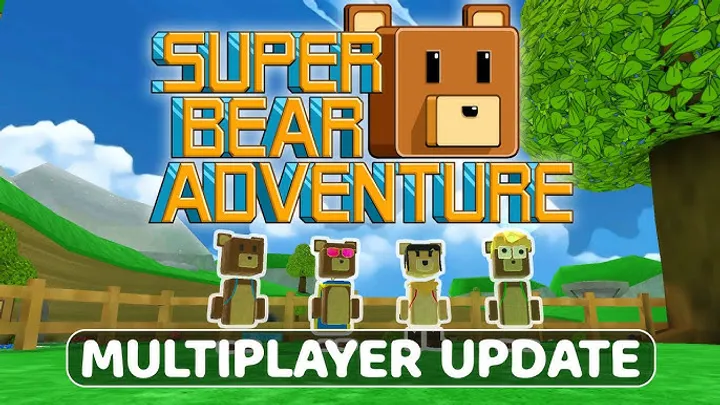






Super Bear Adventure looks simple at first glance. Many players download it expecting a light-hearted 3D platformer inspired by old-school console games, but after several hours, they realize the game hides far more complexity than expected. Coins are scattered in hard-to-reach places, movement techniques are never fully explained, secret entrances blend into the environment, and some missions become frustrating when approached without understanding the game’s deeper mechanics.
Most beginners waste dozens of hours repeating the same inefficient routes, farming coins slowly, or missing important upgrades that dramatically improve movement and exploration. The difference between an average player and an advanced player in Super Bear Adventure is not reaction speed alone — it is knowledge. Understanding how movement chains work, how level design subtly guides players toward secrets, and how enemy behaviors can actually help traversal changes the entire experience.
This guide focuses deeply on how to progress efficiently in Super Bear Adventure by mastering hidden mechanics, advanced exploration strategies, movement optimization, and resource management. Instead of general beginner advice, this article explains practical systems and advanced techniques that experienced players use to clear regions faster, collect more coins, and unlock hidden areas without unnecessary grinding.
Why most players progress slowly in Super Bear Adventure
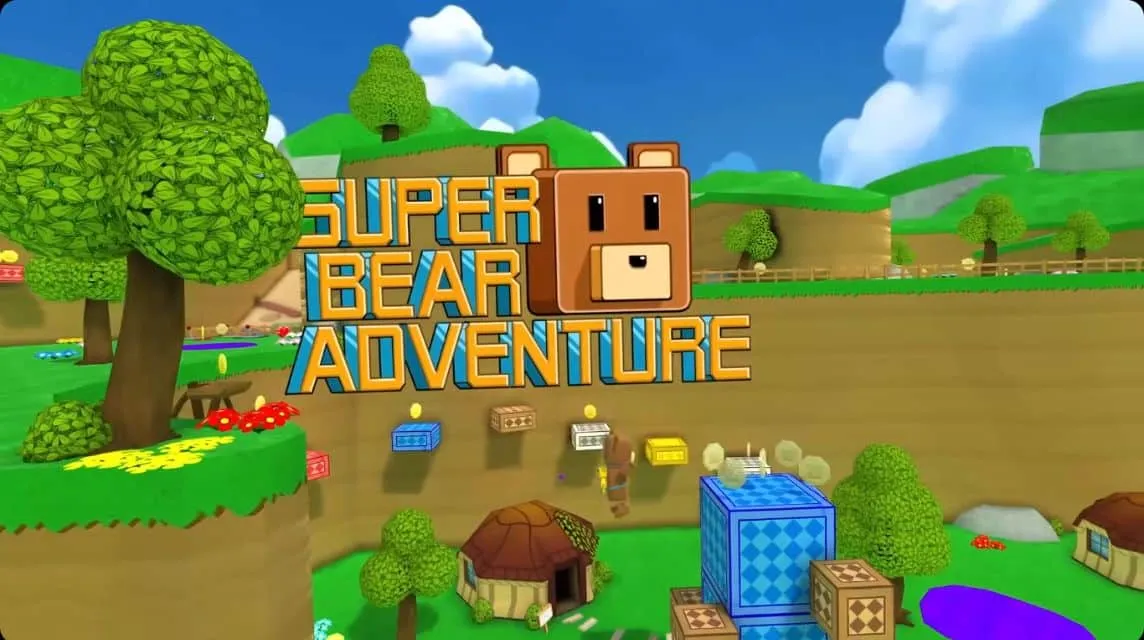
The biggest mistake beginners make is treating Super Bear Adventure like a traditional linear platformer. The game is actually designed around layered exploration. Every region contains vertical paths, hidden entrances, movement shortcuts, and environmental clues that are easy to ignore during the first visit.
Another issue is that players often over-focus on immediate objectives. When an NPC gives a mission, many players rush directly toward the marker without studying the surrounding terrain. This creates a cycle where players repeatedly revisit the same area because they missed hidden collectibles during earlier exploration.
The game also rewards curiosity more than speed. Some secrets are intentionally placed in visually suspicious locations:
- Oddly shaped cliffs
- Isolated trees
- Broken fences
- Small gaps behind waterfalls
- Platforms that seem decorative
- Unusual enemy placements
Advanced players learn to interpret these environmental hints almost subconsciously.
A final reason progression feels slow is inefficient movement. Super Bear Adventure never explicitly teaches advanced traversal combinations, yet these techniques drastically reduce travel time.
Understanding the movement system before anything else
Movement is the foundation of efficient progression. Without mastering movement mechanics, every collectible becomes harder to reach and every exploration section becomes slower.
Most players only use:
- Standard jumping
- Basic climbing
- Normal sprinting
However, the game secretly allows momentum chaining.
How momentum chaining really works
Momentum chaining happens when players combine:
- Sprint timing
- Jump angles
- Slope interaction
- Landing conservation
Instead of stopping fully after landing, skilled players preserve forward speed by immediately chaining another jump while moving downhill or across curved terrain.
This becomes extremely important in:
- Large open fields
- Snow levels
- Floating platform regions
- Mountain routes
The physics engine slightly increases travel efficiency when movement remains uninterrupted.
The hidden importance of diagonal movement
Many players move directly forward toward objectives. Surprisingly, diagonal traversal often preserves momentum better because terrain collision behaves differently at angled movement paths.
Benefits include:
- Faster hill climbing
- Better jump control
- Reduced sliding
- Cleaner landing recovery
This technique is especially useful during precision platforming sections.
How to collect coins efficiently without grinding endlessly
Coins are one of the most misunderstood systems in Super Bear Adventure. New players assume they must farm enemies repeatedly, but advanced progression relies far more on route optimization than combat farming.
Efficient players create “collection loops.”
What is a collection loop?
A collection loop is a planned exploration path that includes:
- High-density coin areas
- Hidden collectible locations
- NPC interaction points
- Fast-travel opportunities
- Shortcut exits
Instead of randomly exploring, experienced players mentally connect locations together.
For example:
- Start near elevated platforms
- Collect airborne coin chains first
- Drop downward through side paths
- Finish near a teleport or checkpoint
This minimizes backtracking.
Why vertical exploration gives better rewards
The game’s designers intentionally place larger rewards at higher elevations because reaching them requires more movement skill.
High-value locations often include:
- Tower rooftops
- Cliff edges
- Tree canopies
- Floating islands
- Hidden cave ceilings
Players who stay grounded miss enormous amounts of currency.
Advanced coin collection priorities
Not all coins deserve equal attention early in the game.
Prioritize:
- Easy vertical clusters
- Puzzle-room rewards
- Movement challenge rewards
- Hidden cave treasures
Delay:
- Dangerous edge-platform coins
- Precision late-game routes
- Time-consuming isolated pickups
This strategy accelerates progression dramatically.
How to discover hidden areas the game never clearly reveals
One of Super Bear Adventure’s greatest strengths is environmental secrecy. Some hidden zones are surprisingly elaborate and contain entire sections many casual players never discover.
The key is understanding environmental language.
Visual clues that usually indicate secrets
Several visual patterns commonly hide entrances:
- Slightly darker walls
- Suspiciously empty corners
- Lone objects in open spaces
- Misaligned textures
- Decorative arches
- Tiny ledges above camera level
The developers often use curiosity as the trigger for discovery.
How sound design helps exploration
Few players realize the game subtly changes ambient sound near important locations.
Examples include:
- Echo changes near caves
- Softer environmental audio near hidden chambers
- Increased collectible sounds near secrets
Using headphones significantly improves exploration efficiency.
Waterfalls are more important than they look
Many hidden areas exist behind waterfalls. This sounds cliché, but Super Bear Adventure intentionally embraces classic platformer traditions.
Always check:
- Waterfall edges
- Shadow gaps behind water
- Elevated waterfall tops
- Side entrances nearby
Some of the best collectibles are hidden there.
Mastering enemy interaction instead of simply avoiding combat
Most beginners either attack every enemy or avoid all combat entirely. Advanced players understand enemies are environmental tools.
How enemies affect movement routes
Certain enemies create momentum opportunities.
Examples include:
- Bounce recovery after contact
- Knockback-assisted jumps
- Platform timing synchronization
Skilled players occasionally take controlled damage intentionally to access shortcuts.
This sounds risky, but it can save significant time.
Understanding enemy patrol logic
Enemies follow surprisingly predictable patterns:
- Linear patrols
- Trigger zones
- Vision activation
- Attack cooldown cycles
Once understood, players can bypass difficult areas smoothly without fighting.
Why combat should stay resource-efficient
Combat rarely provides rewards proportional to time investment.
Avoid unnecessary battles unless:
- A collectible is blocked
- A puzzle requires enemy removal
- A mission objective demands it
- An enemy guards a shortcut
Efficient exploration matters more than full enemy clears.
How to solve difficult platforming sections consistently
Many players struggle because they react emotionally to failure. Advanced platforming in Super Bear Adventure is more rhythm-based than reflex-based.
Consistency comes from reading movement cycles.
The hidden rhythm behind moving platforms
Moving platforms generally operate using predictable timing loops.
Observe:
- Pause duration
- Direction changes
- Speed consistency
- Jump windows
Rushing immediately usually causes failure.
Why camera control matters more than jumping skill
Poor camera positioning creates most platforming mistakes.
Before difficult jumps:
- Rotate the camera manually
- Align landing platforms centrally
- Check vertical spacing
- Remove visual obstructions
A stable camera dramatically improves accuracy.
How advanced players recover failed jumps
Experienced players rarely panic after mistakes.
Recovery techniques include:
- Wall correction jumps
- Midair directional adjustment
- Edge-slide recovery
- Momentum braking
Learning recovery matters more than perfect execution.
The smartest order to explore each world
Progression order strongly affects difficulty.
Most players fully complete one region before moving forward. This is often inefficient because some later abilities make earlier areas easier.
The hybrid exploration strategy
Instead of 100% completing each area immediately:
- Collect accessible rewards first
- Unlock movement upgrades
- Return later for advanced secrets
This saves enormous time.
When backtracking becomes valuable
Backtracking is worthwhile after:
- Unlocking faster movement
- Gaining better jump control
- Learning hidden mechanic interactions
- Discovering shortcut systems
Earlier regions become dramatically easier later.
Why some collectibles are intentionally frustrating early
The developers designed certain collectibles to teach patience.
If something seems nearly impossible:
- Mark the location mentally
- Continue progressing elsewhere
- Return with improved mobility
Forcing difficult collectibles too early wastes time.
How to use checkpoints and fast travel strategically
Most players only use checkpoints defensively. Advanced players use them offensively for routing optimization.
Checkpoint manipulation strategies
Good checkpoint usage allows:
- Faster collectible loops
- Efficient mission completion
- Reduced traversal repetition
- Safer exploration
Before entering dangerous sections:
- Collect nearby easy rewards first
- Unlock shortcuts second
- Trigger checkpoints last
This preserves efficient recovery routes.
Why teleport systems should be unlocked immediately
Whenever fast travel becomes available, prioritize unlocking every travel node.
Benefits include:
- Faster region cleanup
- Easier mission stacking
- Efficient coin farming
- Reduced frustration
Late-game efficiency depends heavily on teleport access.
The psychology behind difficult puzzle sections
Some puzzles feel harder than they actually are because players misunderstand the game’s logic style.
Super Bear Adventure puzzles usually rely on:
- Observation
- Spatial awareness
- Pattern recognition
- Environmental interaction
Rarely pure randomness.
How to identify puzzle language
The game repeatedly teaches puzzle rules through environmental repetition.
Watch for:
- Repeated symbols
- Matching colors
- Directional objects
- Lighting patterns
- Sound indicators
Developers subtly train players without explicit tutorials.
Why slowing down improves puzzle solving
Players often fail puzzles because they move too quickly.
Instead:
- Stop moving temporarily
- Observe the entire room
- Identify unusual objects
- Test interactions systematically
Patience reveals solutions surprisingly often.
How experienced players maximize exploration efficiency
Advanced exploration is about reducing wasted movement.
High-level players constantly ask:
- Can this route serve multiple goals?
- Is there vertical access nearby?
- Can momentum be preserved?
- Is this area worth revisiting later?
This mindset changes progression completely.
The three-layer exploration method
Efficient players mentally divide levels into:
- Ground layer
- Mid-elevation layer
- High-elevation layer
Instead of wandering randomly, they systematically clear each layer.
Why visual memory becomes important
The game rewards environmental memory heavily.
Remember locations containing:
- Locked doors
- Strange symbols
- Suspicious platforms
- Inaccessible ledges
- NPC hints
Later abilities often connect to earlier mysteries.
Hidden advanced techniques most players never learn
Several mechanics remain almost invisible unless players experiment deeply.
Slope acceleration
Running downhill while chaining jumps can preserve enhanced momentum longer than normal sprinting.
This is useful for:
- Long-distance travel
- Speedrun routes
- Difficult timed challenges
Corner climbing
Some edges allow slight collision abuse that grants extra height.
Performed correctly:
- Jump toward corners diagonally
- Hold movement direction consistently
- Use repeated jump timing
This can access hidden areas earlier than intended.
Landing conservation
Landing while already holding directional movement preserves more momentum than stopping briefly.
Small optimization, huge long-term impact.
Camera-assisted precision
Some difficult jumps become easier when aligning shadows rather than character models.
Advanced players often:
- Watch landing shadows
- Ignore character animation
- Use environmental alignment
This greatly improves consistency.
How to prepare for the hardest late-game challenges
Late-game sections combine everything learned earlier:
- Precision movement
- Exploration awareness
- Puzzle logic
- Enemy manipulation
- Camera control
Preparation matters more than reflexes.
Best preparation habits
Before difficult sections:
- Collect nearby checkpoints
- Study movement patterns
- Reduce unnecessary risk
- Practice recovery movement
Confidence matters enormously.
Why frustration causes more mistakes
Players perform worse when rushing after failure.
Common frustration mistakes include:
- Overjumping
- Camera neglect
- Panic movement
- Ignoring timing cycles
Short pauses improve consistency dramatically.
The importance of controlled pacing
The best players rarely move recklessly. They balance:
- Exploration speed
- Observation
- Momentum
- Precision
This creates smooth progression without repeated failure loops.
Conclusion
Super Bear Adventure becomes a completely different game once players understand its hidden depth. Beneath the colorful visuals lies a surprisingly sophisticated exploration platformer built around movement mastery, environmental awareness, and intelligent routing.
The players who progress fastest are not necessarily the most mechanically gifted. Instead, they are the ones who learn how the game communicates secrets, how movement systems preserve momentum, and how exploration layers connect together across regions.
Mastering advanced traversal techniques, understanding environmental clues, using checkpoints strategically, and approaching collectibles with efficient planning transforms the experience from frustrating wandering into deliberate exploration.
Most importantly, the game rewards curiosity. Every suspicious ledge, unusual wall, isolated platform, or hidden cave entrance exists for a reason. Players willing to slow down, observe carefully, and experiment with movement mechanics will uncover far more content than those who simply rush toward objectives.
Super Bear Adventure is ultimately not about reaching the ending as quickly as possible. It is about learning how the world itself is designed — and using that knowledge to move through it smarter, faster, and more creatively than before.