






Introduction
Moonlighter is an action RPG that uniquely combines dungeon crawling with shopkeeping. Players take on the role of Will, a shopkeeper by day and adventurer by night, exploring procedurally generated dungeons, defeating monsters, and collecting loot. The twist is selling these items in your own shop to fund upgrades, gear, and tools for deeper dungeon exploration.
Success in Moonlighter requires balancing risk and reward: venturing further into dungeons yields better loot but increases danger, while running a profitable shop ensures long-term progression. This guide covers essential strategies for combat, loot optimization, dungeon navigation, shop management, resource usage, and progression planning.
Understanding the Core Gameplay Loop
Moonlighter’s core loop alternates between dungeon expeditions and shop management.
Gameplay flow:
- Explore dungeons for loot and materials
- Defeat monsters and collect rare items
- Return to the shop to sell loot and manage inventory
- Upgrade equipment and the shop for better performance
- Repeat with deeper dungeons and more challenging enemies
Efficiency depends on knowing when to push into dangerous areas and when to retreat for shop management.
Early Game Strategies
The early game focuses on establishing a profitable routine and surviving initial dungeon challenges.
Tips for beginners:
- Stick to the first dungeon until combat mechanics are mastered
- Collect and sell common items to fund early upgrades
- Learn enemy attack patterns to avoid unnecessary damage
- Manage inventory carefully to maximize loot return
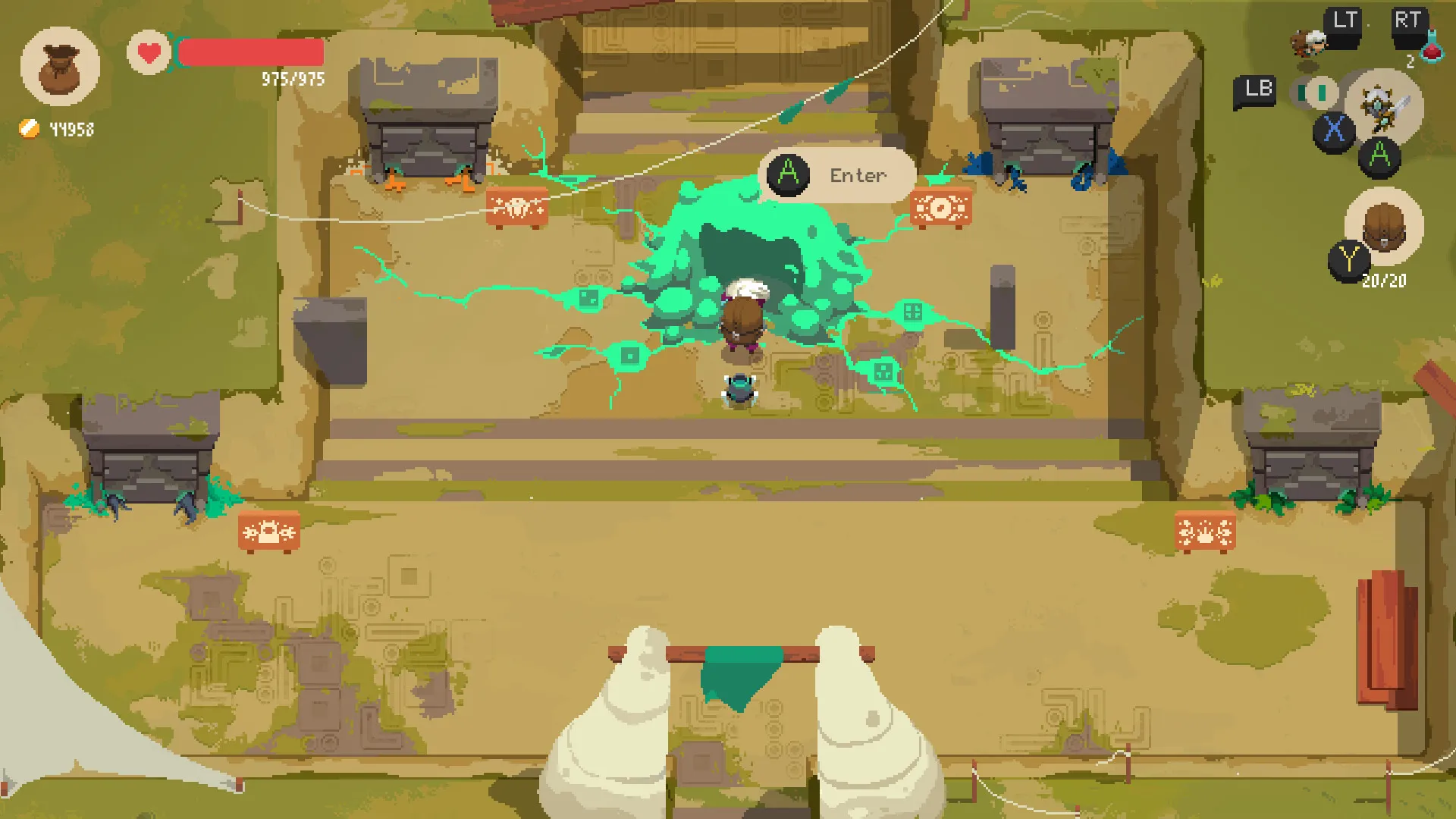
Early success depends on building a stable cycle of dungeon runs and shop profits.
Combat Mechanics and Weapon Selection
Moonlighter offers multiple weapons, each with unique mechanics, ranges, and special abilities.
Combat tips:
- Sword: balanced melee attacks, good for beginners
- Spear: extended range, useful for crowd control
- Bow: long-range, allows hit-and-run strategies
- Magic Staff: area damage, effective for groups of enemies
Mastering dodges, blocks, and attack timing is essential, as enemies have telegraphed but punishing attacks.
Dungeon Navigation and Exploration
Dungeons are procedurally generated, filled with enemies, traps, and hidden treasures.
Exploration tips:
- Memorize enemy spawn patterns for safer navigation
- Prioritize clearing rooms efficiently to conserve health and resources
- Search for hidden rooms to find rare items and chests
- Retreat when health is low to avoid losing valuable loot
Strategic exploration maximizes loot gains while minimizing risk of death.
Loot Management and Item Prioritization
Loot is the key to both combat progression and shop profit. Not all items are equally valuable.
Loot management tips:
- Identify high-value items for maximum profit
- Keep rare crafting materials for future upgrades
- Avoid selling items required for quests or crafting
- Organize inventory to quickly access healing items and keys
Smart loot management ensures steady progress without financial setbacks.
Shop Management and Pricing
Selling items efficiently is crucial for funding gear and dungeon expeditions.
Shop tips:
- Adjust prices according to customer demand for better profits
- Restock popular items to maintain daily sales
- Upgrade shop facilities to increase revenue and customer satisfaction
- Balance selling high-value items with keeping materials for crafting
Effective shop management creates a sustainable cycle of income and upgrades.
Equipment Upgrades and Crafting
Progression relies on upgrading weapons, armor, and tools using dungeon loot.
Upgrade tips:
- Focus on equipment that enhances survivability first
- Use rare materials for weapons with high damage potential
- Upgrade inventory and backpack for better dungeon efficiency
- Craft special items that provide long-term benefits
Strategic upgrades improve dungeon performance and reduce risk.
Mid-Game Strategies
Mid-game introduces tougher dungeons, more complex enemy patterns, and rare loot.
Mid-game tips:
- Explore multiple dungeon floors to diversify loot collection
- Learn enemy weaknesses to optimize combat strategy
- Invest in shop upgrades to support high-level gear purchases
- Experiment with different weapon and ability combinations

Mid-game planning ensures smooth transition to the more challenging late-game content.
Late-Game Optimization
Late-game involves mastering all dungeons, collecting rare loot, and achieving maximum shop efficiency.
Late-game tips:
- Focus on elite weapons and high-level gear
- Optimize shop layout and pricing for maximum profit
- Complete dungeon challenges for rare rewards
- Plan runs carefully to minimize resource waste and maximize loot
Efficiency and strategy are essential to fully enjoy Moonlighter’s endgame content.
Conclusion
Moonlighter combines dungeon crawling and shop management in a unique blend of strategy and action. Success requires mastering combat mechanics, smart dungeon exploration, efficient loot management, and profitable shopkeeping. By balancing risk and reward, players can progress through increasingly challenging dungeons while building a thriving shop and upgrading equipment to face elite enemies.
160-Character Summary
Master Moonlighter with combat, dungeon exploration, loot management, and shop strategies for progression, profit, and survival in a roguelike RPG.