
Cooking Clash Guide: Best Tips for Cooking, Managing Customers, and Protecting Your Tips
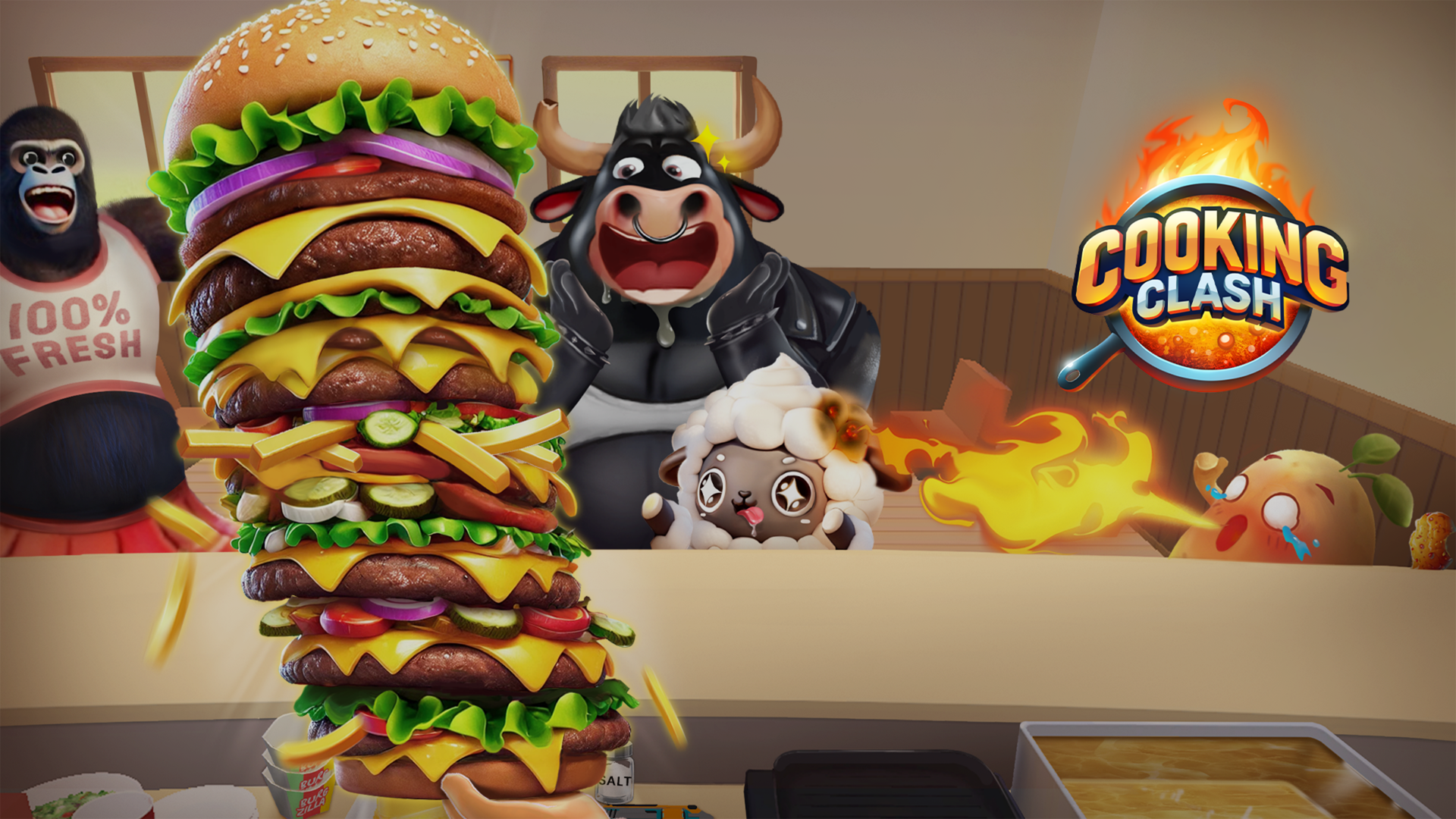
Cooking Clash is a fast-paced cooking and restaurant simulation game where players prepare food, experiment with ingredient combinations, serve unusual customers, and deal with unexpected problems inside the kitchen. The game combines familiar cooking mechanics with a chaotic restaurant-management style, making speed and decision-making just as important as knowing what to cook. The mobile version is available on Android and iOS, while a VR version is also available on PC through Steam.
The basic concept is easy to understand: prepare dishes, satisfy customers, earn money, and keep the kitchen running. However, Cooking Clash adds unpredictable customers, unusual food combinations, and situations where players need to protect their hard-earned tips. Recent updates have also added features such as Sandbox Mode, additional customers, weapons, rewards, rankings, and new gameplay adjustments.
Because the kitchen can quickly become chaotic, the most effective strategy is not simply to cook as fast as possible. Players need to organize their actions, understand customer behavior, experiment with ingredients, and react quickly when something unexpected happens. This guide covers ten practical tips to help you improve your kitchen performance and handle more difficult shifts.
1. Learn the Basic Cooking Loop
The first step in Cooking Clash is understanding the game's basic gameplay cycle. You prepare or combine ingredients, create dishes, serve customers, and manage the results of each interaction.
Although the process sounds straightforward, the kitchen can become increasingly difficult as more customers appear and additional complications are introduced. If you do not have a clear routine, you can quickly become overwhelmed by multiple orders and unexpected events.
Start by learning how ingredients behave and how dishes are created. Do not worry about perfect efficiency during your first few sessions. Understanding the basic sequence of actions is more important than trying to serve every customer at maximum speed.
Build a Consistent Routine
A simple routine can make the kitchen much easier to manage. First identify what the customer wants, then gather the necessary ingredients, prepare the dish, and deliver it as efficiently as possible.
Once this sequence becomes familiar, you can start improving your speed. The objective is to reduce unnecessary movement and make each action contribute directly to completing an order.

2. Experiment With Ingredient Combinations
One of Cooking Clash's distinctive features is its emphasis on mixing ingredients and experimenting with food combinations. The game encourages players to treat the kitchen as a place for experimentation rather than simply following a rigid recipe system.
This means you should not be afraid to test different combinations when the situation allows it. Understanding which ingredients can be combined successfully can help you respond more confidently when customers request different dishes.
Experimentation can also make the game more interesting because discovering a useful combination can change how efficiently you handle future orders.
Keep Track of Successful Combinations
When you discover a combination that works well, remember it. Repeatedly experimenting with the same ingredients can waste valuable time during a busy shift.
Over time, you can develop your own mental list of useful combinations. This makes future cooking decisions faster and reduces hesitation when several customers are waiting.
3. Prioritize Customer Orders
Customer management is one of the most important parts of Cooking Clash. Different customers can have different expectations, and some may be particularly demanding or unpredictable. The official game description specifically highlights picky and unusual customers as part of the experience.
When several customers are waiting, avoid choosing orders randomly. Look at what each customer needs and determine which order can be completed efficiently.
A customer whose dish is almost ready may deserve priority over an order that requires several additional steps. Completing quick orders can help keep the kitchen moving and prevent the number of waiting customers from becoming unmanageable.
Watch for Difficult Customers
Not every customer should be treated exactly the same way. Some may create additional problems or demand more attention than ordinary diners.
Stay aware of customer behavior while continuing to cook. If you notice that a particular customer is becoming a problem, adjust your priorities rather than allowing the situation to disrupt the entire kitchen.
4. Protect Your Tips
Tips are an important part of Cooking Clash's restaurant-management system. The game introduces customers who may attempt to take the tips you have earned, meaning that making money is not simply a matter of serving food quickly.
This creates another layer of decision-making. You need to maintain good service while also paying attention to what is happening around you.
Do not become so focused on preparing food that you completely ignore your earnings. If the game gives you an opportunity to protect or recover your tips, react quickly.
Treat Earnings as a Resource
Money and tips should support your longer-term progression. Avoid thinking only about the current order; consider how your earnings can contribute to future improvements.
Efficient cooking, good customer management, and protecting your tips work together. A fast kitchen that constantly loses its earnings is not necessarily an efficient one.

5. Keep the Kitchen Organized
Organization becomes increasingly important as the number of customers and ingredients increases. A disorganized kitchen forces you to spend more time moving between different tasks.
Try to keep your actions predictable. When possible, group related activities together instead of constantly switching between unrelated orders.
For example, if several dishes require similar ingredients, preparing those ingredients efficiently can reduce unnecessary movement. The exact strategy depends on the situation, but the general principle remains the same: minimize wasted actions.
Avoid Unnecessary Movement
Every extra action can cost time during a busy shift. Running back and forth because an ingredient was forgotten can turn a manageable order into a problem.
Before beginning a dish, quickly identify what you need. This small amount of planning can make your cooking process significantly smoother.
6. Stay Calm During Kitchen Chaos
Cooking Clash intentionally introduces unexpected situations. The game describes its kitchen as chaotic, with surprises occurring while players are trying to prepare and serve food.
When several problems happen simultaneously, panicking usually makes the situation worse. Players may start moving randomly, forget orders, or abandon dishes that were nearly finished.
Instead, pause mentally and identify the most important problem. Decide which customer or task needs immediate attention, then deal with that issue before moving to the next one.
Solve Problems in Order
When multiple problems appear, use a simple priority system:
- Handle the most urgent customer or threat.
- Finish dishes that are nearly complete.
- Prepare ingredients for important upcoming orders.
- Deal with lower-priority tasks afterward.
This approach prevents the kitchen from becoming a collection of unrelated emergencies.
7. Take Advantage of Sandbox Mode
Cooking Clash has included a Sandbox Mode that allows players to explore without the normal time pressure. The feature was introduced as a free-play mode and later received additional content and adjustments.
Sandbox Mode can be particularly useful for learning. Instead of worrying about completing a shift efficiently, you can experiment with ingredients, explore the kitchen, and become familiar with different systems.
This makes it a good environment for testing ideas that you would not want to risk during a more demanding session.
Use Sandbox Mode as a Practice Area
Try different ingredient combinations and experiment with the available tools. Pay attention to which actions are efficient and which ones waste time.
Once you understand the mechanics, return to regular gameplay and apply what you learned. Practice is much more valuable when it directly improves your decision-making during actual shifts.
8. Learn From New Customers and Features
Cooking Clash has continued receiving updates that introduce additional content and gameplay systems. Updates have added new customer types, weapons, pets, rewards, rankings, and other features over time.
This means the game can change as new versions are released. A strategy that works well in one version may become less effective after new mechanics are introduced.
Whenever new content appears, spend some time understanding how it affects the kitchen. Do not immediately assume that your previous strategy remains optimal.
Adapt Your Strategy After Updates
If a new customer type creates a different problem, adjust your priorities. If a new tool provides an advantage, learn when it is most useful.
Keeping your strategy flexible is especially important in a game where unexpected events are part of the core experience.
9. Improve Speed Without Sacrificing Accuracy
Cooking Clash rewards fast decision-making, but speed alone is not enough. Preparing the wrong dish quickly is still a mistake.
Focus first on accuracy. Once you understand the cooking process and customer requirements, gradually increase your speed.
This approach is more reliable than trying to perform every action as quickly as possible from the beginning. Good performance comes from combining correct decisions with efficient execution.
Reduce Hesitation
One of the biggest sources of wasted time is uncertainty. If you already understand what a customer wants and know how to prepare it, move directly to the necessary actions.
Your goal should be to make routine decisions almost automatic while reserving your attention for unexpected problems.
10. Build a Long-Term Restaurant Strategy
The strongest Cooking Clash players do more than survive individual kitchen situations. They gradually develop a consistent strategy for handling customers, ingredients, earnings, and new challenges.
Think about which parts of your current playstyle are slowing you down. Maybe you spend too much time searching for ingredients, prioritize the wrong customers, or fail to react quickly when something unexpected happens.
Identify one weakness at a time and improve it. Small improvements can have a significant effect when repeated across many shifts.
Combine Speed, Planning, and Adaptability
A successful kitchen needs all three qualities. Speed allows you to serve customers efficiently, planning prevents unnecessary actions, and adaptability helps you respond when the game introduces something unexpected.
Do not focus exclusively on one skill. A balanced approach will make you more consistent across different situations and updates.
Conclusion
Cooking Clash combines cooking simulation, customer management, ingredient experimentation, and chaotic kitchen events into a fast-paced restaurant experience. The game's recent versions have continued expanding its systems, while its core gameplay remains centered around preparing food, serving customers, earning tips, and handling unexpected situations.
To improve, start by learning the basic cooking loop and experimenting with ingredient combinations. Prioritize customer orders, keep the kitchen organized, and protect the tips you earn. When the kitchen becomes chaotic, remain calm and solve the most urgent problem before moving to the next task.
Sandbox Mode can also provide a useful environment for experimenting without normal time pressure. As you become more familiar with the game's systems, focus on increasing your speed without sacrificing accuracy.
Most importantly, stay adaptable. Cooking Clash is designed around surprises, unusual customers, and changing challenges. The ability to adjust your strategy when something unexpected happens is what separates a merely fast cook from an efficient one.